Blue Book on Honda Goldwing Se 20th Anniversary
The Honda Gold Wing arrived in 1974 at the Cologne Motorcycle Show, and its design and classification were so ambiguous that it couldn't be properly classified. This resulted in the Gold Wing failing in any category it were to be placed in, such as touring bikes.
Sales were dismal and Honda was about to pull the plug until Honda heard public feedback regarding how, despite the Gold Wing's lack of proper categorization, it was proving beneficial, effective, and practical.
Honda was immediately receptive to the opinions of the masses, tailoring the next two models specifically to cater to customer satisfaction. Many Gold Wings from the initial era still survive today, and the value of those bikes largely depends on the condition they are currently in.
Read on to find out more about the pricing, condition, history, and features of the 1970s Honda Gold Wing.
Related: Here's Why You Should Buy A Honda VTR1000F Superhawk
Condition May Vary
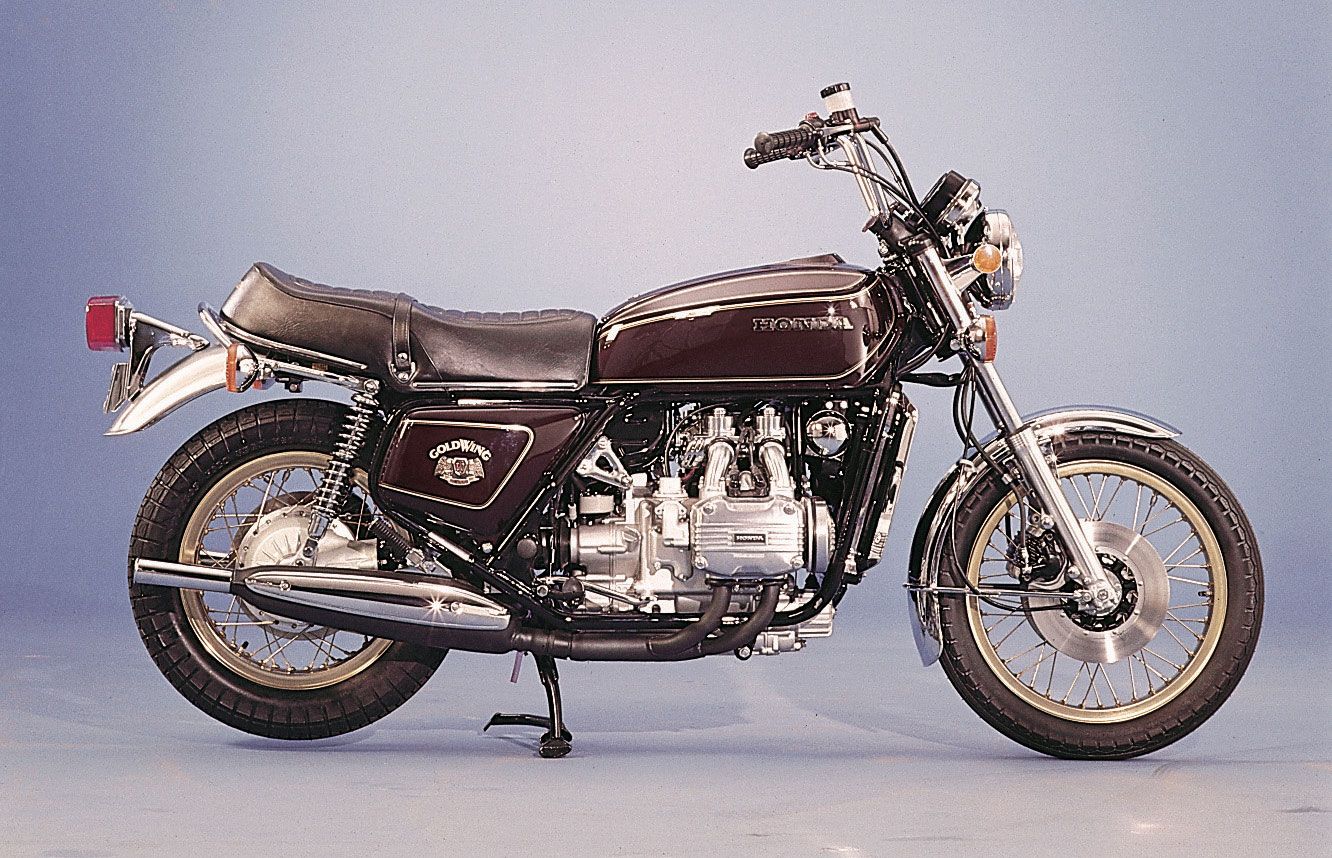
As with a lot of older cars (and motorcycles), the price of the Honda Gold Wing varies by condition. For a model in "excellent" condition, the usual MSRP is around $5,330. A model in "very good" condition drops the price a few thousand to be $3,005. The next tier would be "good," where the value is cut 40% in order to make the price $1,665. Finally, a Honda Gold Wing in "fair" condition would only cost approximately $1,295. However, there is some discrepancy, as when riders seek to trade in a Honda Gold Wing at a dealership, the price for one in good condition or better is around $2,655.
It should be noted that this figure presumes the Honda Gold Wing doesn't have excessive mileage, and that it has the standard engine specs, all original standard equipment intact and functioning, and nothing restored or customized, which would significantly increase the price. According to Kelley Blue Book, the "typical listing price" for a Honda Gold Wing in solid condition would be $3,880 with typical mileage when purchasing from a dealer.
Motorcycle Show Origins
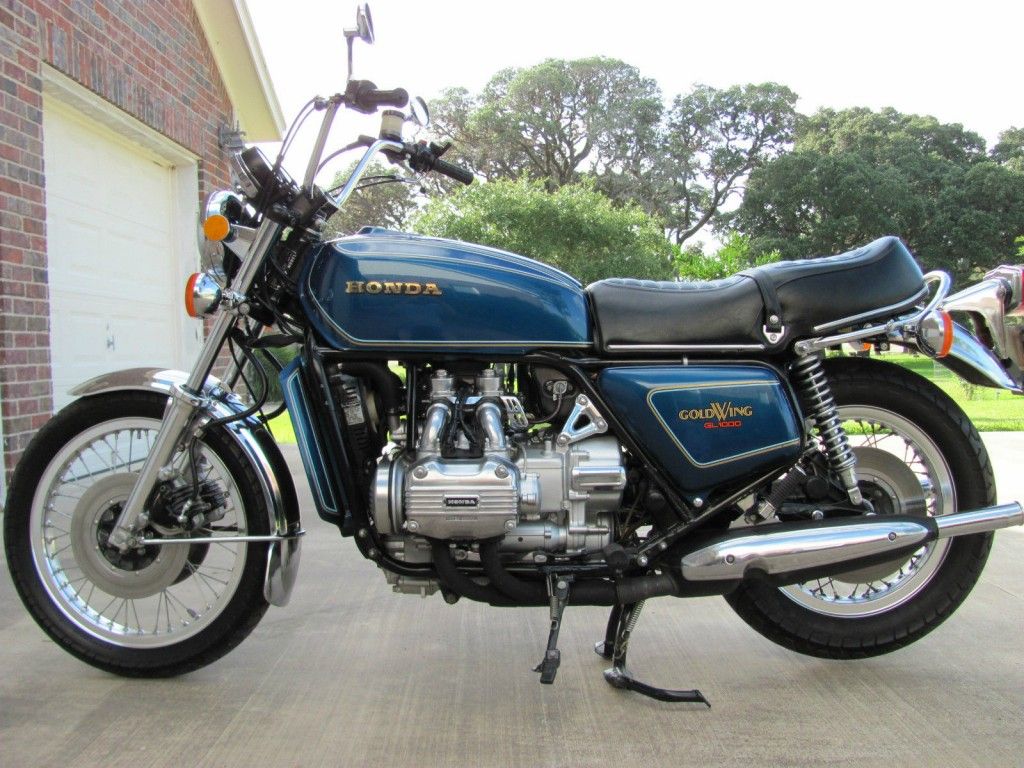
The Honda Gold Wing made its debut at a motorcycle show and became more popular from there. The Cologne Motorcycle Show in October 1974 was the site of the Honda Gold Wing's debut, and it was a flat-four cylinder, 999cc GL1000.
Although it would later rise to the challenge and become successful and popular, the first model on display was not an immediate hit. Its ambiguous classification did not help matters, as the Honda Gold Wing blurred the guidelines between categories.
That said, it was "officially" classified as a touring bike because it was too heavy to be considered for the sports bike category. After all, the sitting position was too upright and the dry weight was 584 lbs. The rear coil spring also lacked weight support capability. Unfortunately, the Honda Gold Wing also lacked a touring kit, so it was not particularly favorable as a touring bike. Honda only sold 10% of what they initially projected in the Gold Wing's first year.
After a few years, however, the bike began to prove its worth by showing solid reliability. It could travel vast distances without incident, making it more versatile than a bike used solely for a short work commute or for a nice Sunday ride around town. Honda heard the public's reviews and took note, as they wanted to design the next version to cater to customer demand and rider specifications.
Updates Arrive
With customer feedback in mind, when the Honda Gold Wing finally received updates, the newer generation became even more popular. Questionnaires were even filled out at rallies because Honda was hungry for input.
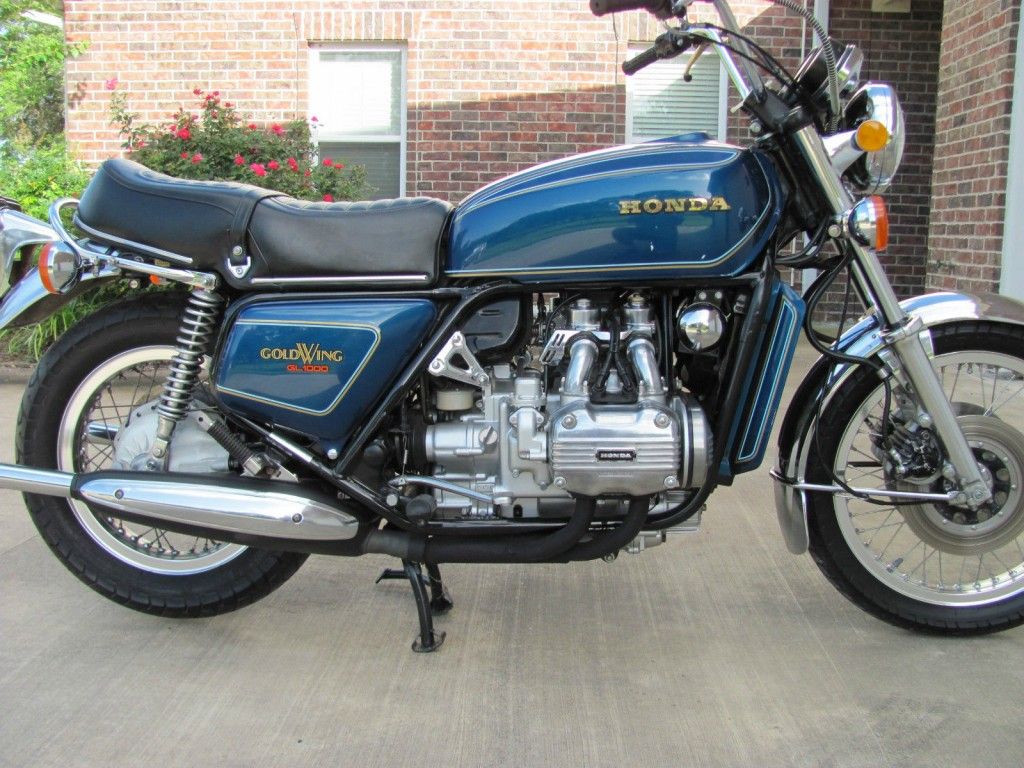
As a result, the 1977 version of the Gold Wing had a dual contoured saddle, higher handlebars with neoprene grips, and chromed heat shields on the header pipes. These changes were well-received and kept the public happy, and Honda made the 1978 version of the Gold Wing with even more customer feedback in mind.
Therefore, the next model would have smaller carburetors, shorter valve timing, and increased spark advance. As a result, the 1978 model was more aesthetically pleasing, with less top speed and more torque for a long-distance rider, and a lack of kick starter. The exhaust system was also covered in chrome, and the famed stepped saddle made its debut.
Longevity Is Astounding
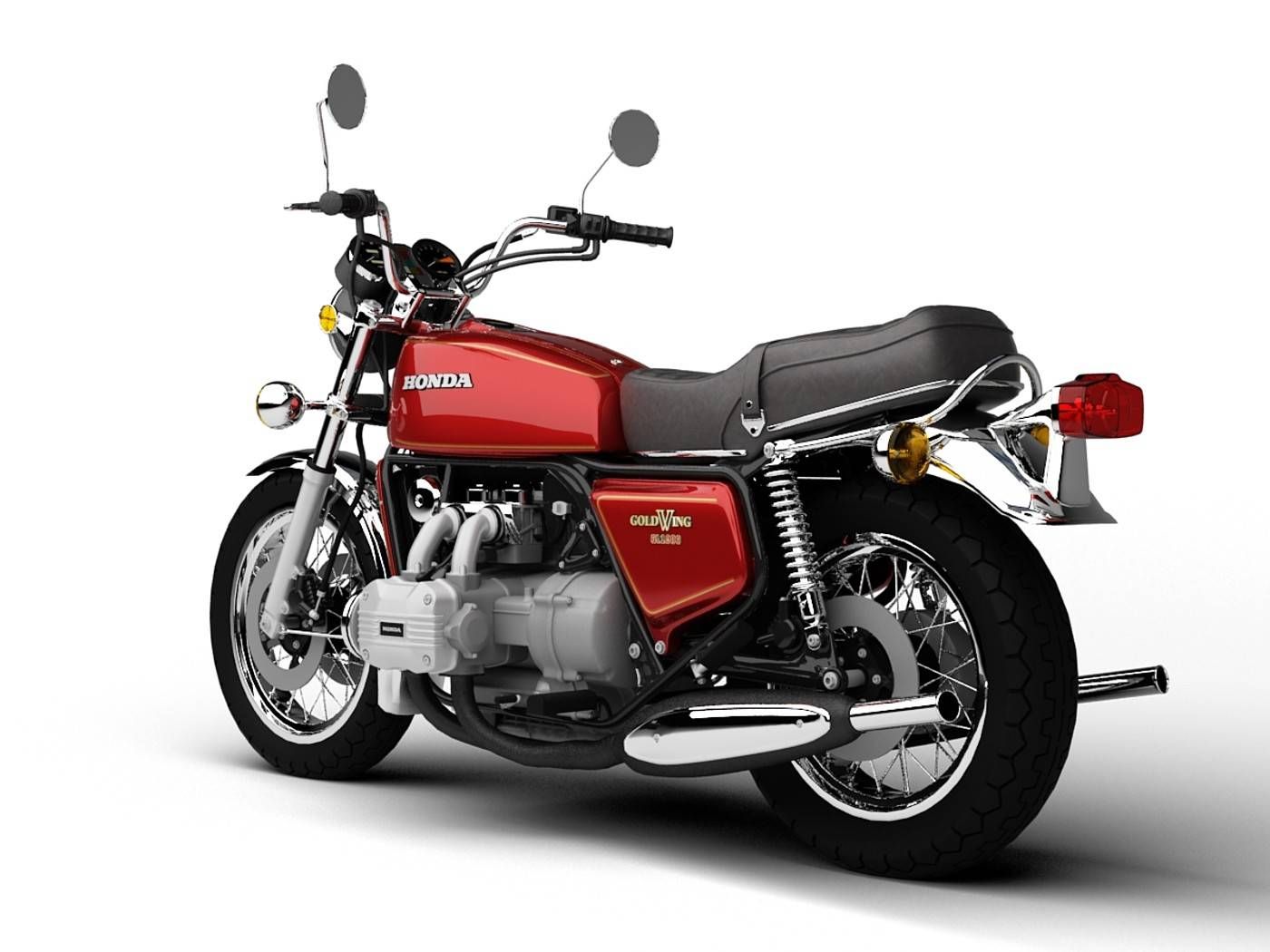
These bikes can garner an outrageous amount of miles while still functioning optimally. Given the proper maintenance and responsible riding, the Honda Gold Wing can go for between 250,000 and 300,000 miles on average before no longer being functional.
Riders would have to use the bike for around 15 years to make the mileage that high. A few reports even state how the Honda Gold Wing can go up to 400,000 miles, but that's the best-case scenario, with all the maintenance and service scheduled properly and done thoroughly.
Because the Honda Gold Wing is powered by high-performance, car-like engines, it can last 20-40 years if riders only ride 10,000 to 20,000 miles each year. It's all possible when riders follow the maintenance schedule, clean the bike regularly, check the bike thoroughly monthly, use quality parts for repair and replacement, and store the bike safely indoors.
Sources: totalmotorcycle.com, nadaguides.com, kbb.com, enginepatrol.com,
Source: https://www.hotcars.com/1970s-honda-gold-wing-costs/
Belum ada Komentar untuk "Blue Book on Honda Goldwing Se 20th Anniversary"
Posting Komentar